
The CRM market isn't just growing, it's fundamentally changing. The global CRM market is projected to reach $53 billion within the next 12 months, with 91% of companies already using these tools to manage their sales and customer data. But here's what's really happening beneath those numbers: the companies leading this transformation aren't just adding AI features to traditional CRMs. They're rebuilding customer relationship management from the ground up.
61% of companies plan to add AI to their CRM within the next three years, yet many are approaching this the wrong way, treating AI as an add-on rather than the foundation. The AI CRM companies that matter in 2025 understand something different: autonomous operation isn't a feature set, it's an architecture.
This shift matters because sales reps spend 72% of their time on non-selling activities. The question isn't whether AI can help—it's which companies are actually solving that problem versus those just talking about it.
What separates AI CRM companies from traditional vendors
Not every platform calling itself an "AI CRM" deserves the label. The real distinction comes down to how AI is integrated into the system's core architecture.
Traditional CRM vendors bolted AI onto existing platforms. They added chatbots here, predictive scoring there, maybe some email generation. The underlying system remained the same—a database requiring constant manual input, with AI as an optional enhancement.
AI-native companies took a different approach. They asked: what if we assumed AI would handle data capture, enrichment, and routine decision-making from day one?
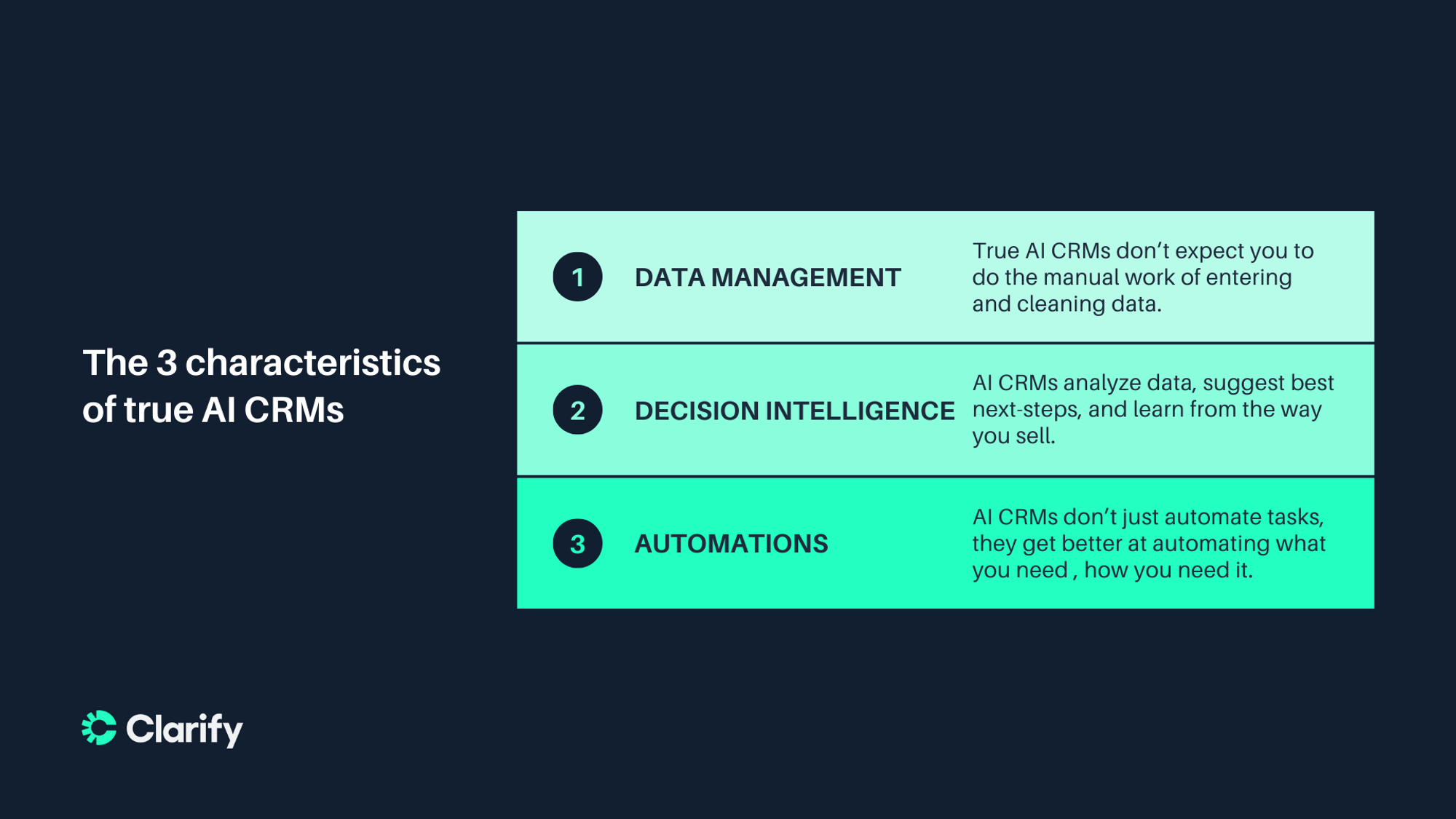
The difference shows up in three critical ways:
Data capture and maintenance. Traditional CRMs with AI still expect humans to log calls, update fields, and maintain records. AI might suggest what to write, but someone has to write it. AI-native platforms like Clarify automatically capture interactions, extract relevant information, and keep records current without human intervention.
Decision intelligence. AI in CRM systems analyzes data patterns, learns from outcomes, and adapts its behavior accordingly. Where traditional systems might score leads based on simple rules, AI-native platforms examine which behaviors actually correlate with closed deals in your specific context, then adjust their models continuously.
Workflow automation. Traditional CRMs let you automate tasks. AI-native systems automate workflows—when this pattern emerges, execute this sequence of actions, learn from the results, and refine the approach. Clarify's event-driven architecture responds to triggers like receiving an email from a portfolio company CEO by updating deal records, alerting team members, and suggesting follow-up actions without manual intervention.
According to Salesforce’s State of Sales report, 83% of sales teams with AI saw revenue growth in 2024, but that number masks significant variation. Teams using AI-native platforms report faster time-to-value and higher productivity gains than those adding AI features to legacy systems.
The AI CRM landscape: Who's building what
The market breaks into four distinct categories, each serving different needs with different approaches to AI integration.
The autonomous CRM pioneers
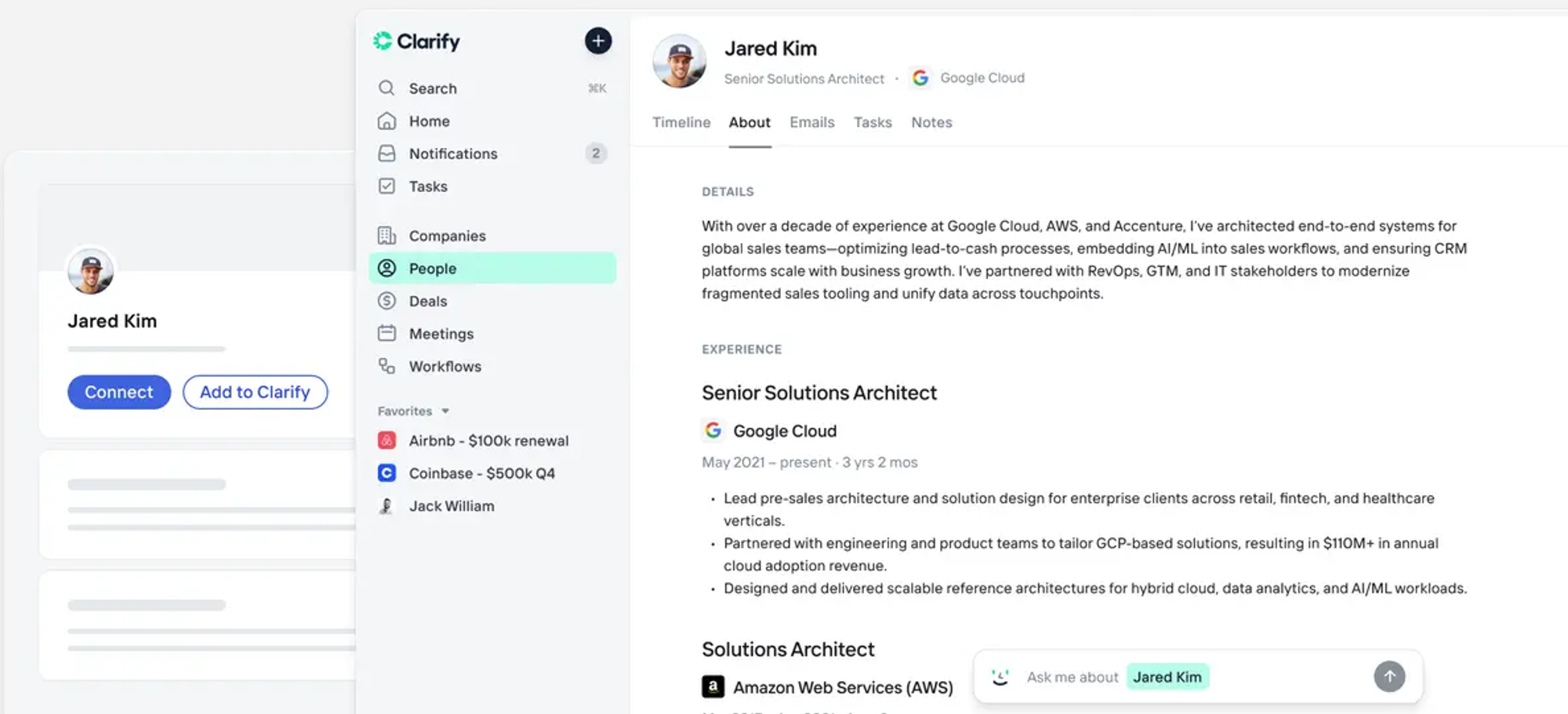
Clarify leads this category with full sales automation, event-driven architecture, and AI-powered insights. Unlike platforms where AI assists humans, Clarify's autonomous approach means the system handles routine work entirely—capturing calls, enriching contacts, suggesting next steps, and updating records without requiring human input. The credit-based pricing model reflects this philosophy: you pay for AI actions that save time, not for seats that may or may not use the features.
The company's approach to data enrichment illustrates the difference. Traditional CRMs might offer a "refresh" button to pull updated company information. Clarify continuously monitors for changes and updates records automatically, using waterfall enrichment to pull data from multiple sources until complete profiles exist.
The modern relationship-first platforms
A newer wave of CRM companies is challenging traditional approaches with relationship-centric design and AI that focuses on context rather than just automation.
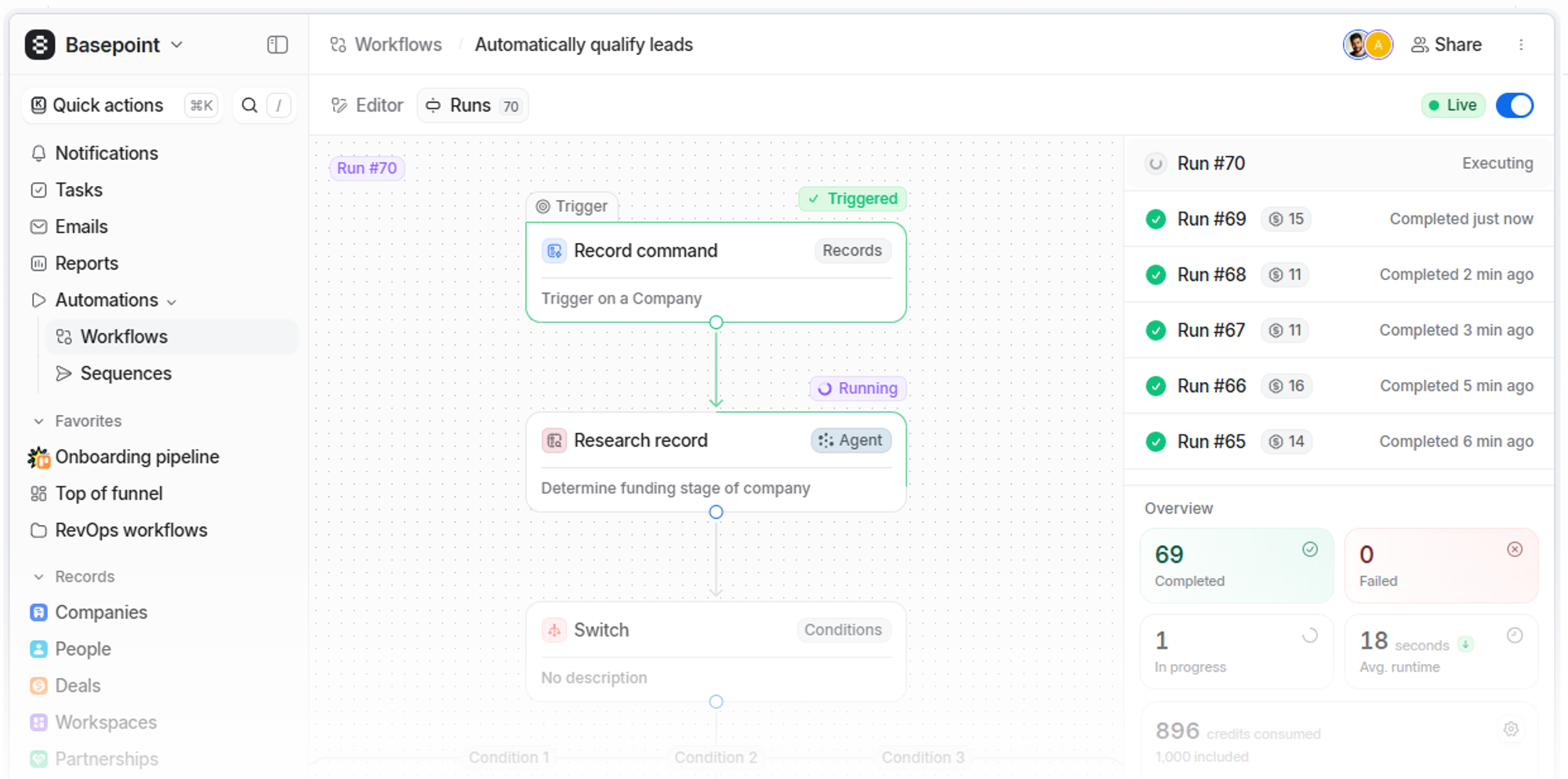
Attio rebuilt CRM around flexible data models and relationship intelligence. Rather than forcing your sales process into predefined fields and stages, Attio lets you structure data how your business actually works. Their AI focuses on surfacing relationship insights and connection patterns that matter for deal progression. The platform particularly resonates with founder-led sales teams who need lightweight flexibility without sacrificing power.
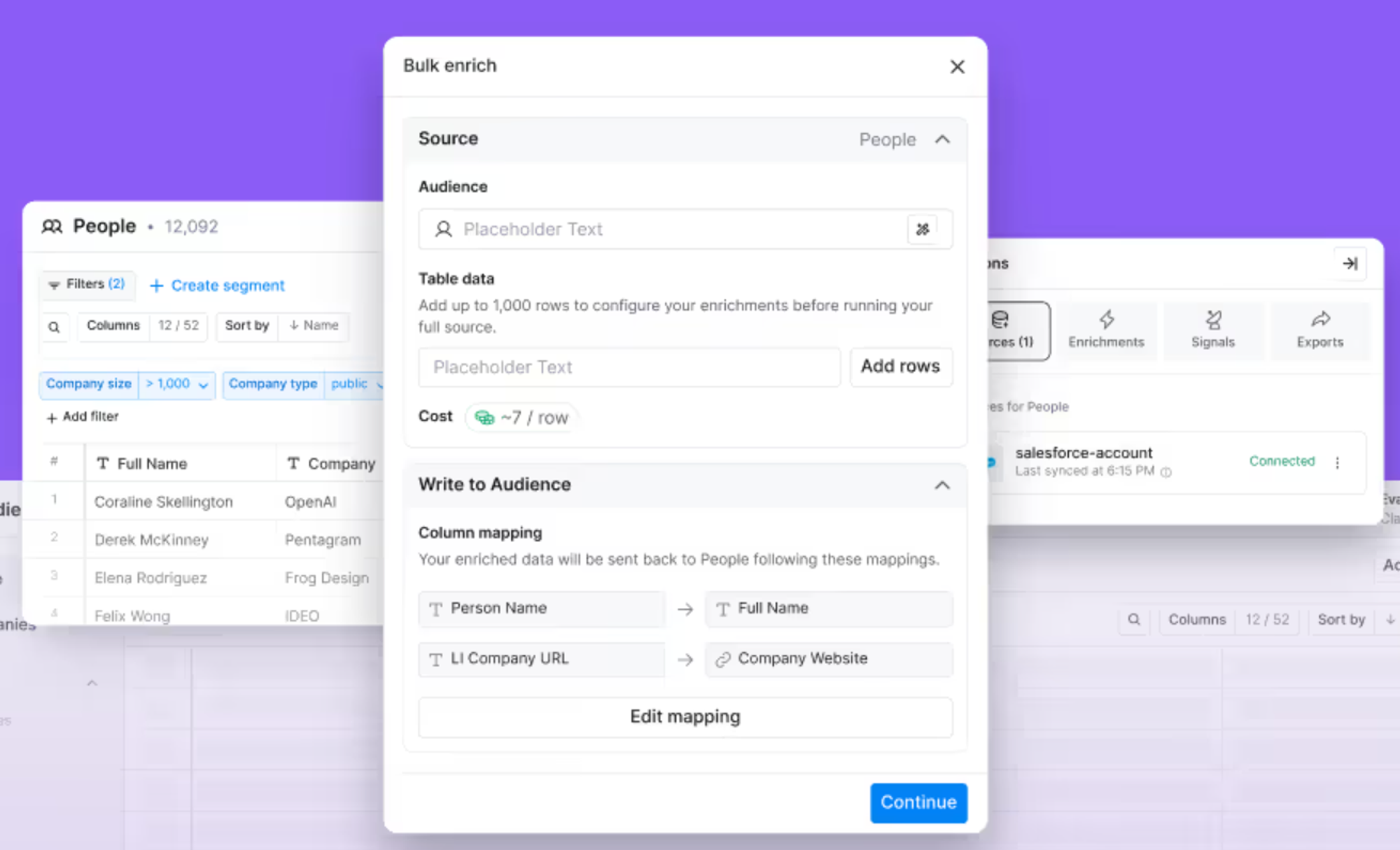
Clay (often positioned as a CRM alternative) takes a different angle—using AI to aggregate data from dozens of sources and automate enrichment at scale. While not a full CRM, their approach to AI-powered prospecting and data synthesis influences how newer CRM companies think about contact intelligence.
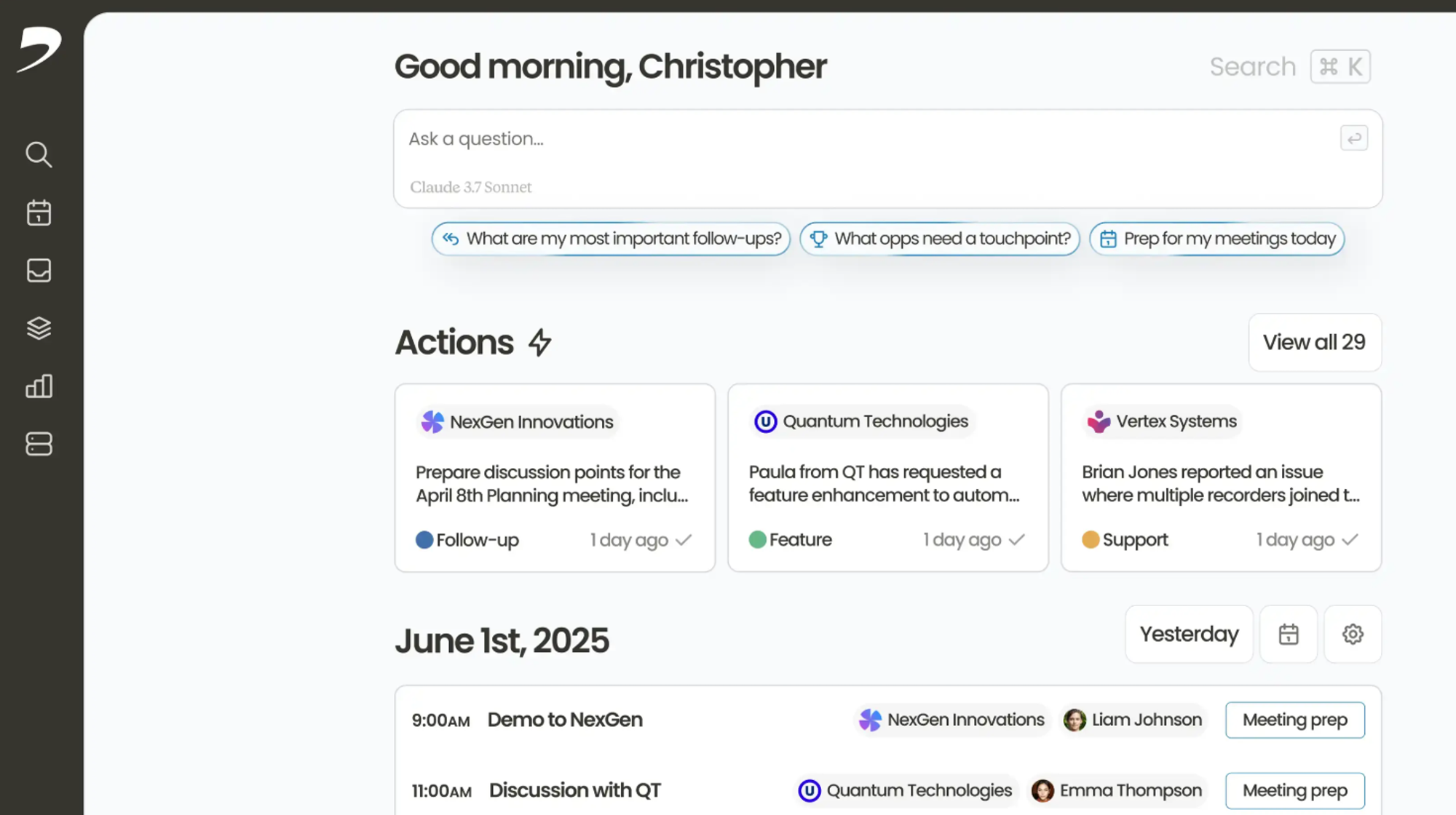
Day.ai positions itself as the CRM for AI-native companies. It has a chat-first interface and offers advanced call recording and conversation tracking capabilities (slack, email, etc.)
The common limitation with these newer platforms: they excel at specific workflows but may lack the comprehensive automation that truly autonomous CRMs provide across the entire revenue operation.
The enterprise AI platforms
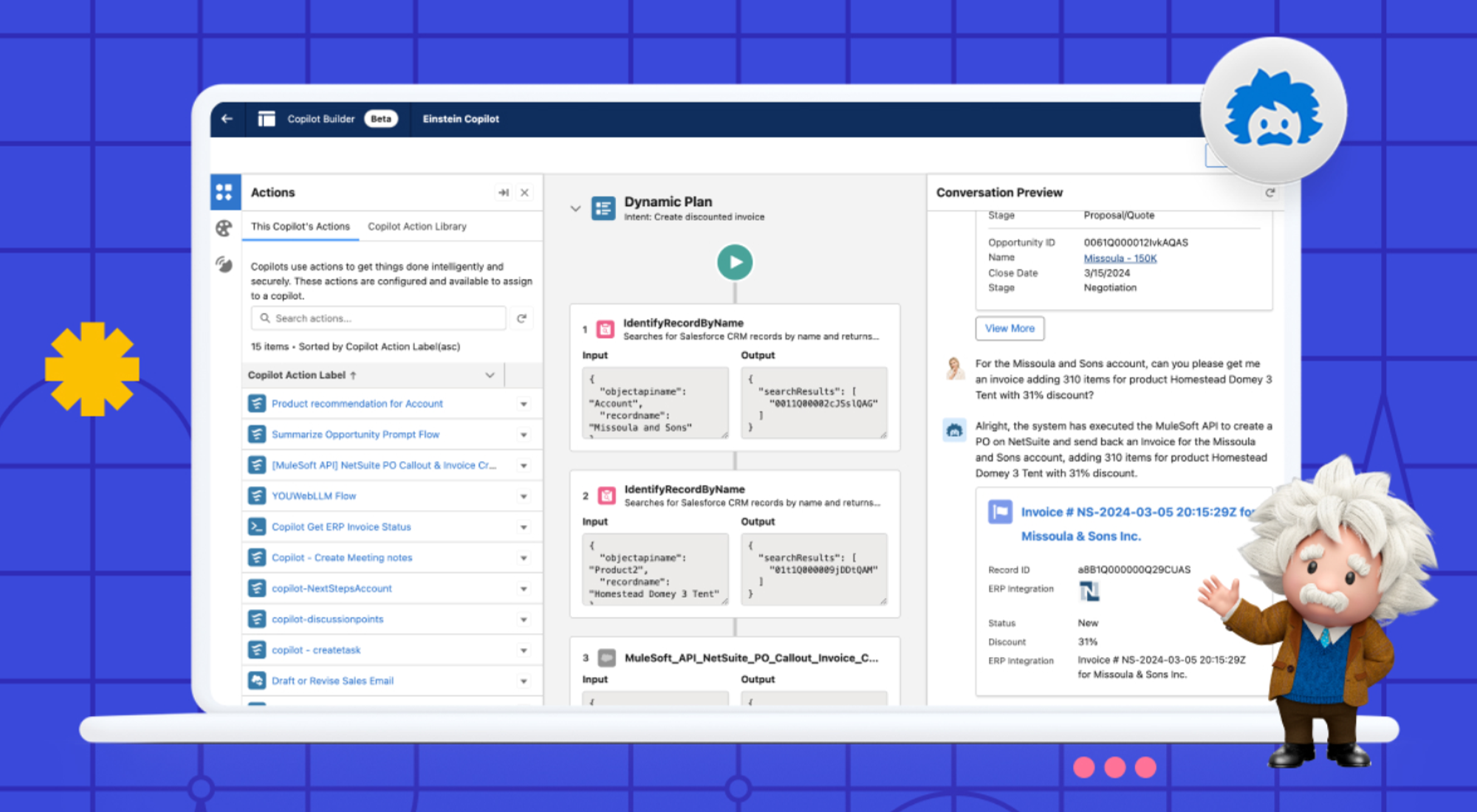
Salesforce Einstein processes millions of data points to provide predictions, personalized recommendations, and advanced analytics across all Salesforce clouds. Companies like T-Mobile and American Express report significant improvements in sales productivity and forecast accuracy after implementing Einstein. The challenge: substantial implementation time and ongoing optimization requirements that strain smaller teams.
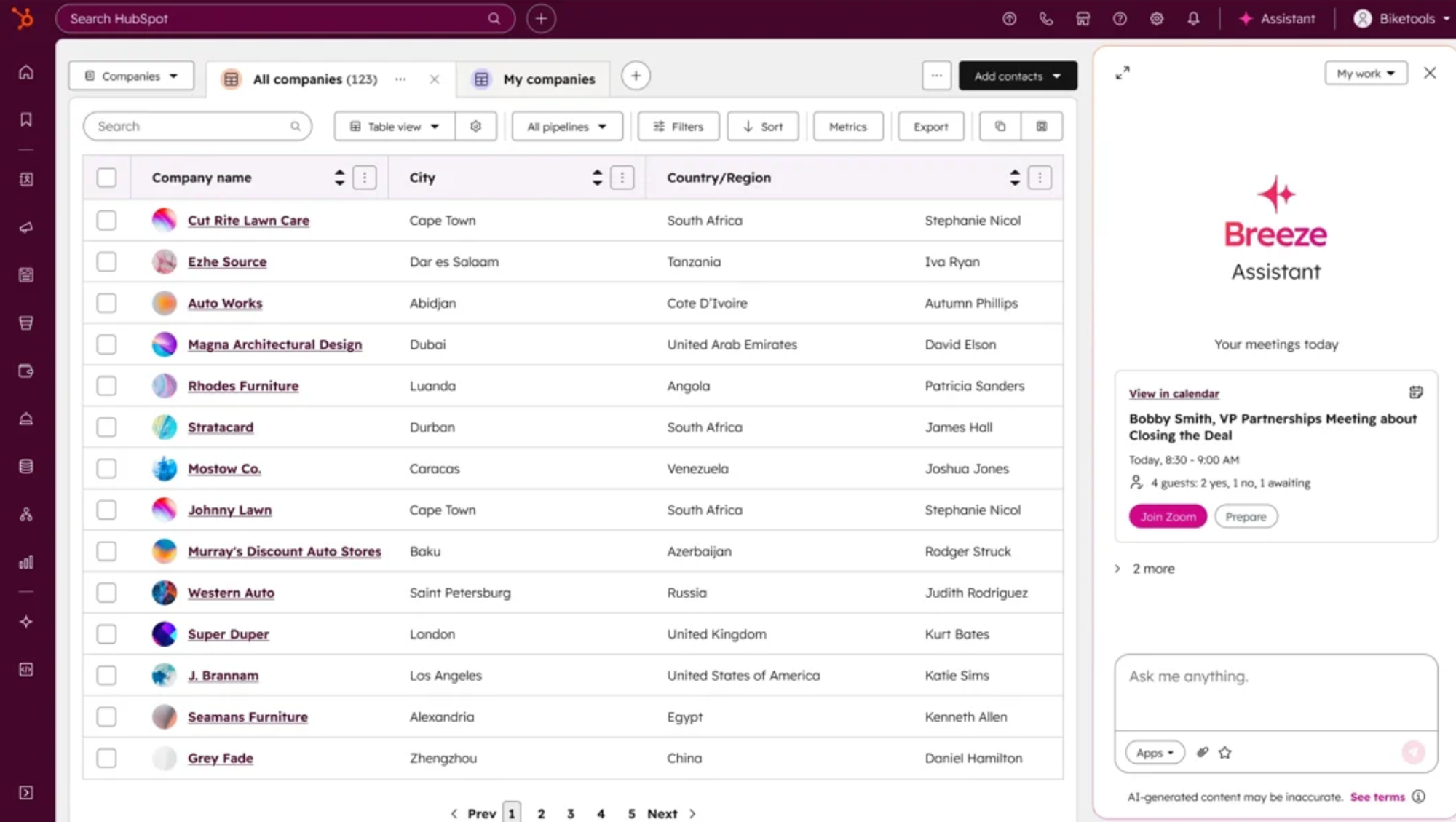
HubSpot with Breeze Copilot takes a middle ground, offering predictive lead scoring that automatically identifies which leads are most likely to convert based on historical data and behavioral patterns, working without manual setup and improving accuracy as more data becomes available. The free tier provides genuine value, though advanced AI features require higher-tier subscriptions that can become expensive as teams grow.
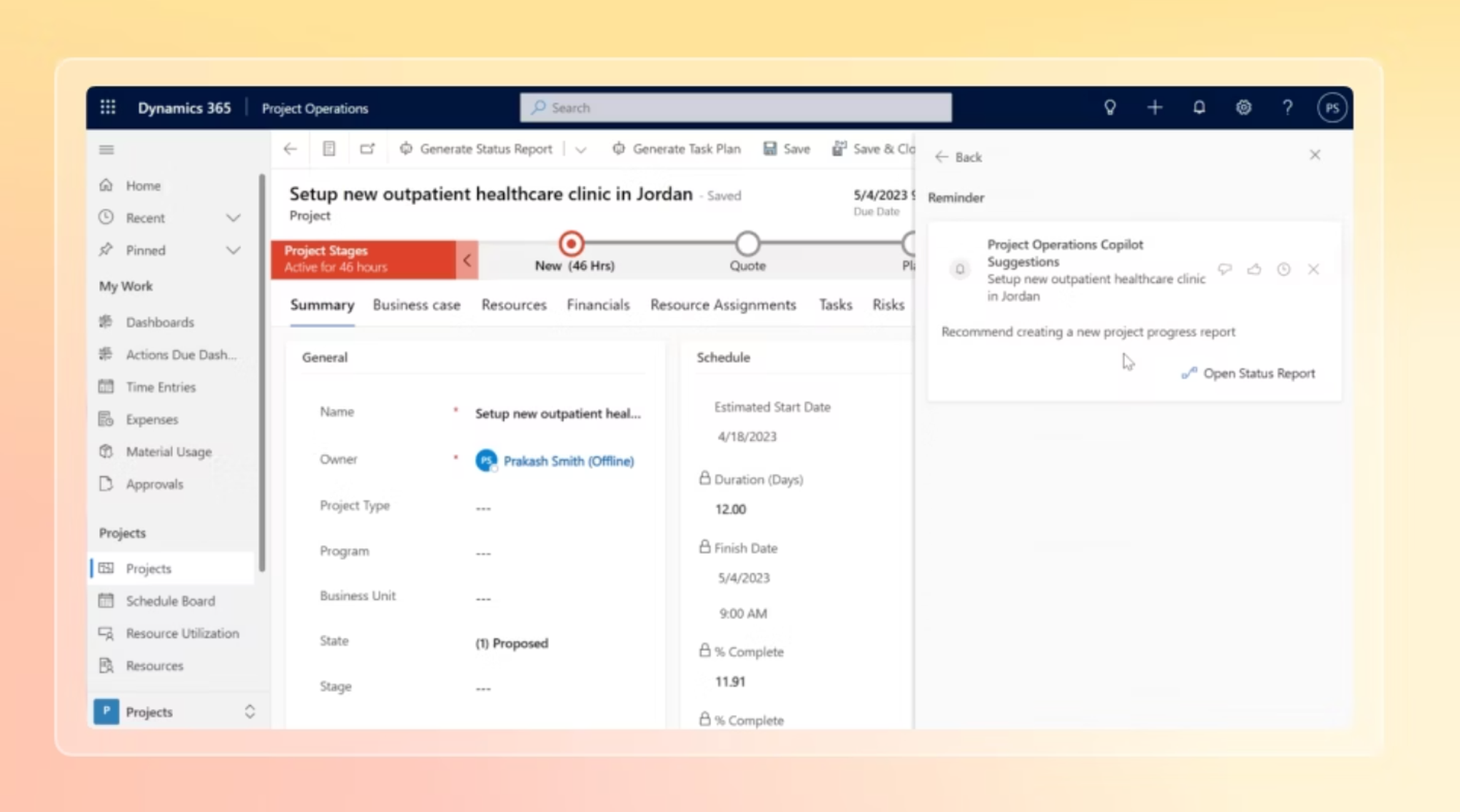
Microsoft Dynamics 365 with Copilot embeds generative AI throughout the platform, from email drafting to meeting summarization. For organizations already invested in Microsoft's ecosystem, the integration value is real.
The specialized AI enhancers
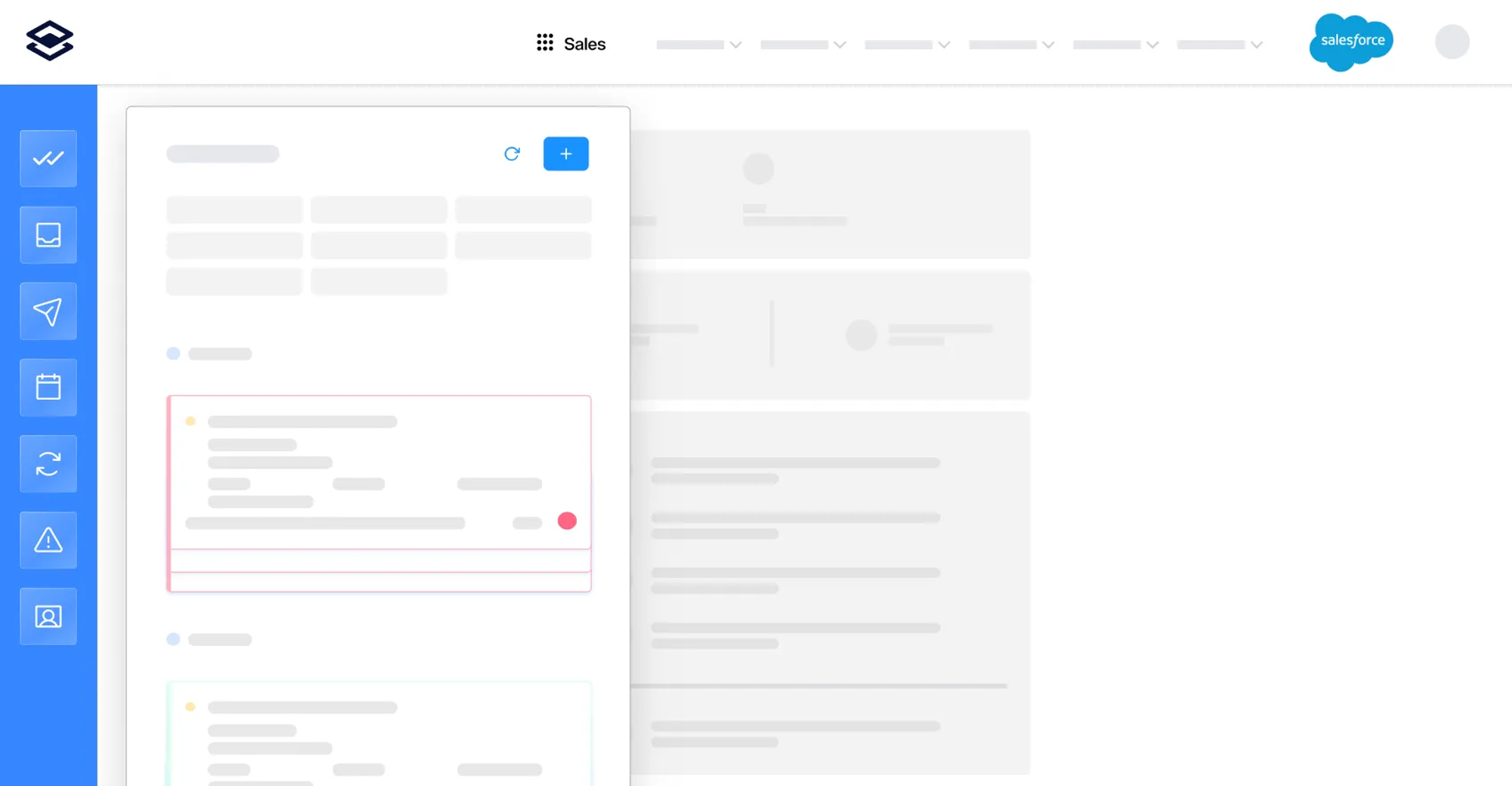
Harmonix AI installs on top of any CRM like Salesforce, Dynamics, SAP, or custom-built systems, digitizing and centralizing all communication channels directly within the CRM. This approach works well for organizations committed to their current platform but seeking better AI capabilities. The limitation: these systems can only be as autonomous as the underlying CRM allows.
How the best AI CRM companies handle core functionality
The real test of any AI CRM company comes down to execution on fundamentals.
Contact and company enrichment
Traditional approaches offer manual "enrich" buttons that pull data on demand. Missing fields stay missing until someone remembers to try again.
Clarify's waterfall enrichment automatically cycles through multiple data sources in priority order, stopping only when complete profiles exist. New contact comes in? The system immediately enriches it. This happens continuously, not on command.
The difference compounds over time. After six months with a traditional CRM, your database is littered with incomplete profiles. With autonomous enrichment, those contacts have been complete since day two.
Predictive intelligence and workflow automation
AI-powered CRM analyzes information to guide real-time decisions, identifying weak points in your pipeline, scoring leads depending on their likelihood to convert, and automating tasks.
Basic AI scoring assigns points based on activity. Advanced platforms analyze patterns in your historical data—which combinations of behaviors actually preceded closed deals? Predictive capabilities move beyond reporting what happened to forecasting what will happen, with AI analyzing thousands of data points to identify deals at risk and suggest specific actions to move opportunities forward.
Event-driven systems respond to context, not just rules. When a prospect emails asking about pricing, Clarify doesn't just log the interaction—it updates the deal stage, suggests specific pricing configurations based on similar customers, prepares relevant case studies, and alerts the rep with context about what this signal means for deal velocity.
Pricing models and the shift to outcome-based economics
Salesforce, Zoho, and HubSpot lead in CRM market share by number of installations, with Salesforce holding 23.9% of the global market. Yet their per-seat pricing models increasingly misalign with how AI-native CRMs deliver value.
The traditional model charges per user per month. AI changes the economics. The value comes from AI doing things: enriching contacts, capturing calls, scoring leads, generating insights. Per-seat pricing makes teams gate-keep access, limiting who can benefit from the system.
Outcome-based pricing was first introduced to the CRM market in August 2024 by Zendesk for its increasingly autonomous AI agents, with pricing directly tied to the outcomes delivered by AI agents.
Clarify's credit-based model takes this further. Credits power AI actions—contact enrichment, call transcription, predictive scoring. Unlimited seats mean everyone on your team can access the CRM without artificially inflating costs. For a five-person startup, this typically means $200-400 monthly versus $500-750 for per-seat subscriptions.
Newer platforms like Attio use more traditional per-seat pricing but at competitive rates that reflect their modern efficiency. The key question isn't which pricing model is "better"—it's whether the model aligns with how the platform actually delivers value.
ROI and time-to-value: What the data actually shows
AI-native CRMs deliver ROI in 3-6 months versus 12-18 months for legacy systems, with acceleration coming from pre-built integrations, autonomous data capture, and minimal training requirements.
The productivity story is equally dramatic. Sales reps become 40% more productive when administrative tasks are eliminated. A rep spending 20 hours weekly on CRM admin tasks who moves to an autonomous platform gains 8 hours back. Every week. That's effectively an extra day of actual selling time.
AI-powered CRMs generate 300-400% ROI compared to traditional CRMs' 100-200% return, with early adopters reporting 40% revenue increases within the first year.
The path to these results requires choosing platforms architected for autonomous operation from the beginning. Systems that treat AI as an add-on can't deliver the same fundamental time savings because they still require human intervention at critical workflow points.
Where AI CRM companies are heading
Agentic AI takes CRM to another level, with systems that can act independently rather than relying on preset rules, optimizing particular goals or objectives such as maximizing sales, customer satisfaction scores, or efficiency.
The near-term evolution includes more sophisticated autonomous agents that don't just suggest actions but execute complete workflows, deeper contextual intelligence that understands not just what happened but what it means, and truly unified customer timelines where AI automatically correlates activities across channels into coherent narratives.
Many of the administrative tasks that sales reps spend time on are getting automated. The companies architected for autonomous operation from the beginning will reach that milestone faster than those retrofitting AI onto traditional platforms.
Choosing an AI CRM company: What actually matters
Strip away the marketing language and focus on these operational realities:
How much manual data entry does the platform actually eliminate? Not "how much could it eliminate"—how much does it eliminate out of the box, for a team that's busy selling?
How quickly do you see value? Days or months? Platforms designed for autonomous operation deliver results in 3-6 months versus 12-18 months for legacy systems.
Does the pricing model align with how AI delivers value? Credit-based models reflect the reality that AI's value comes from actions it takes, not users who log in.
Is AI native to the platform or retrofitted? This determines whether the system can truly operate autonomously or still requires human intervention at workflow friction points.
For founder-led teams and small businesses where every hour counts, these questions matter more than feature checklists. You need systems that work with your limited bandwidth, not platforms that demand constant configuration.
Clarify built an autonomous CRM because we saw too many talented founders spending their nights updating CRM fields instead of talking to customers. The platform assumes AI will handle routine work and humans will focus on relationships. That architectural choice—AI-first, not AI-enhanced—drives everything else.
The AI CRM companies that matter in 2025 understand that autonomy isn't a feature. It's a fundamental reimagining of what customer relationship management means when AI can finally handle everything that doesn't require human judgment.
Frequently asked questions
What's the difference between an AI CRM and a traditional CRM with AI features?
AI-native CRMs architect their entire platform around autonomous operation, assuming AI will handle data capture, enrichment, and routine decisions from day one. Traditional CRMs with AI features bolt intelligent capabilities onto existing manual processes, requiring ongoing human intervention at key workflow points. The distinction shows up in time-to-value: AI-native platforms deliver ROI in 3-6 months versus 12-18 months for retrofitted systems.
How do credit-based pricing models work for AI CRMs?
Credit-based pricing charges for AI actions (contact enrichment, call transcription, predictive scoring) rather than per user seat. You pay for the work the AI performs to save your team time, not for the number of people accessing the system. This typically costs 40-60% less for small teams compared to per-seat models while removing artificial access restrictions that limit CRM adoption.
How long does it take to implement an AI CRM?
Implementation timeframe varies dramatically by platform architecture. AI-native systems with pre-built integrations and autonomous data capture can be operational within 48 hours. Traditional CRM platforms enhanced with AI typically require 2-4 weeks of configuration, training, and workflow setup before delivering value.
Are AI CRM companies suitable for small businesses and startups?
Modern AI CRM platforms are particularly valuable for resource-constrained teams because they eliminate administrative overhead rather than adding to it. Credit-based pricing models make advanced capabilities affordable for early-stage companies, while autonomous operation means small teams get enterprise-level functionality without enterprise-level complexity or headcount.
How do newer CRM companies like Clarify, Attio, and Day.ai compare to established players?
Newer platforms often excel at specific use cases—Attio for flexible relationship management, Day.ai for chat-first interactions—with modern interfaces and competitive pricing. However, they may lack the comprehensive autonomous operation that platforms like Clarify provide across the entire revenue cycle. The choice depends on whether you need specialized depth or broad autonomous coverage.
Keep Reading
AI-powered CRMs: Top platforms in 2026 & how to choose
Clarify vs. Lightfield: Which CRM is right for your team?
Why CRMs must become autonomous (not just AI-Powered)
Cut admin, not corners: The best AI CRM for founders and startups
Autonomous GTM: The future of revenue
How small business founders can eliminate manual sales work with an autonomous CRM